Home › Commercial Asphalt Resurfacing & Overlays
Extend the life of your paved surfaces with commercial asphalt resurfacing in Tampa, FL. We repair base failures, then apply overlays that renew appearance and performance at a lower cost than full reconstruction. Ideal for aging parking lots and drive lanes that still have a sound foundation.
Precision Asphalt Tampa provides professional commercial asphalt resurfacing throughout Tampa, FL, Florida and the surrounding area. Our licensed, insured crew delivers safe, clean, on-time work with a free estimate before anything begins. Call (813) 694-5697 or request your free quote.
Commercial Asphalt Resurfacing for Tampa Properties
Commercial asphalt resurfacing is often the most cost-effective way to restore a tired or failing parking lot without paying for a full tear out. At Precision Asphalt Tampa, we evaluate how much life is left in your existing pavement, then install an asphalt overlay that ties into your drainage, traffic patterns, and long-term budget.
In Tampa, resurfacing must be planned around heat, daily thunderstorms in summer, and occasional tropical systems. That means we schedule work so the existing surface is dry, the base is stable, and the new overlay has enough time to cool and set before traffic returns. Our crews routinely phase work so your business can stay open, with clearly marked temporary access paths and staged closures.
We focus on commercial properties that see steady traffic and need a professional image: retail centers, medical offices, industrial yards, HOAs, schools, and churches. The goal is not just a black surface that looks new. A properly designed overlay must address structural issues so your investment lasts longer than a quick cosmetic cap.
When Resurfacing Makes Sense vs Full Replacement
Not every cracked lot in Tampa is a candidate for commercial asphalt resurfacing. Precision Asphalt Tampa starts with a core evaluation: we walk the site, document cracking patterns, check drainage, and in many cases cut or drill small test locations to see the thickness of existing asphalt and base.
Resurfacing is usually appropriate when: the subbase is firm, alligator cracking is limited to less than about 30 to 40 percent of the surface, depressions are shallow, and drainage can be corrected with localized milling and leveling. In these cases we can repair the worst areas, then overlay the overall surface with 1.5 to 2 inches of new hot mix asphalt.
If we see pumping water through cracks after rain, deep rutting in drive lanes, or asphalt that shifts under load, we recommend partial or full reconstruction instead. Tampa’s sandy soils and heavy delivery traffic often create failures at dumpster pads, drive-through lanes, loading docks, and entry aprons. These spots may require full-depth removal and stronger base, while the rest of the lot receives a resurfacing overlay. This hybrid approach often saves tens of thousands of dollars compared with total replacement while still solving the underlying problems.
Step-by-Step: How Commercial Asphalt Resurfacing & Overlays Are Done
Our resurfacing process is structured so you know exactly what will happen on your property and when.
1. Site evaluation and layout: We map drainage paths, identify low spots, locate soft areas, and mark out sections that need milling, patching, or reconstruction. We also note utilities, ADA routes, and high-traffic areas so we can phase work with minimal disruption.
2. Structural repairs: Before any overlay is placed, we excavate failed areas, remove soft base, and replace it with compacted limestone or crushed concrete suited to Tampa’s soils. We typically install new asphalt base in these patches and compact with vibratory rollers to achieve proper density.
3. Milling and surface preparation: To tie an overlay into existing concrete gutters, catch basins, or sidewalks, we machine mill transitions and sometimes entire lanes. This avoids creating tripping hazards or high edges at entrances. We then clean the pavement with mechanical sweepers and blowers so no sand, leaves, or dust remain that could weaken the bond.
4. Tack coat application: We spray a uniform tack coat, usually an asphalt emulsion, over the existing surface. In Tampa’s heat we carefully control application rate so the emulsion “breaks” properly and does not track onto sidewalks and door thresholds.
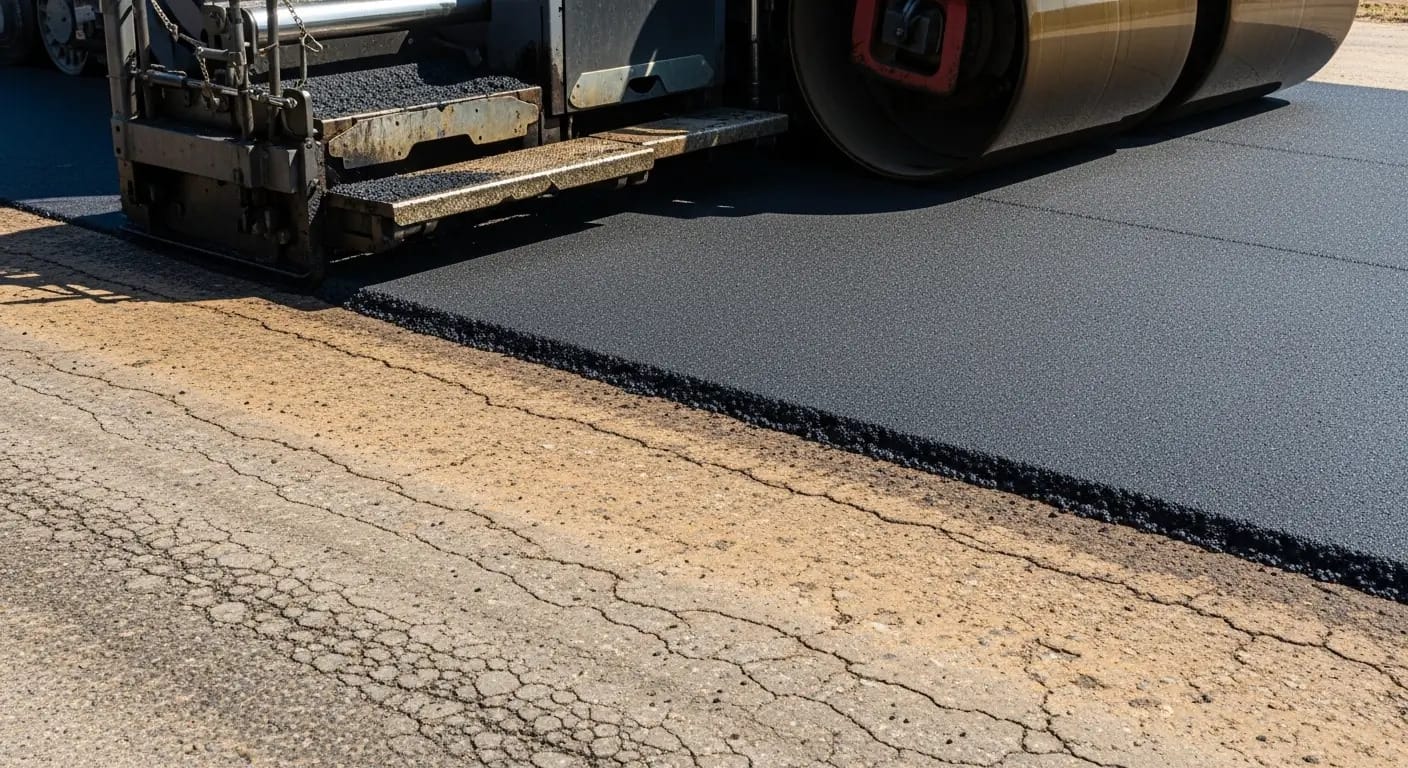
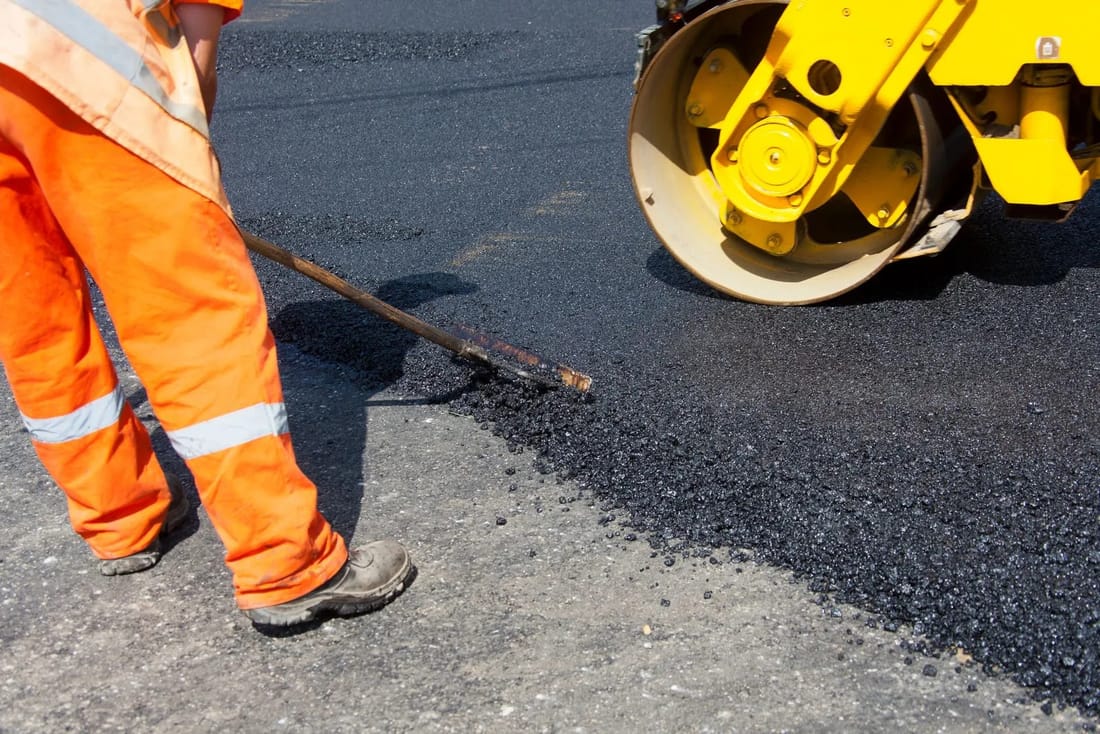
5. Placement of new asphalt overlay: Hot mix asphalt is delivered from local plants at the right temperature for the day’s conditions. We spread it with a self-propelled paving machine, then compact in several passes using steel drum and pneumatic rollers. In commercial parking lots, overlay thickness commonly ranges from 1.5 to 2 inches, with heavier applications in primary drive aisles.
6. Joint finishing and clean up: We carefully compact seams where lanes meet and where new asphalt joins existing surfaces so water cannot easily penetrate. The site is cleaned, and barricades or cones are placed to control traffic until the surface cools.
7. Striping and ADA compliance: Once the asphalt has cooled, we re-stripe stalls, traffic markings, fire lanes, and ADA spaces. If layout changes are needed to meet current Florida Building Code and ADA standards, we design them as part of the resurfacing scope.
Overlay Design Choices: Mixes, Thickness, and Traffic Needs
A successful commercial asphalt resurfacing job in Tampa is not one-size-fits-all. Precision Asphalt Tampa matches materials and thickness to how your site is actually used.
For high-volume shopping centers or medical campuses with steady car turnover, we often specify a dense graded surface mix that balances smoothness and skid resistance. At warehouse or industrial sites with heavier trucks, we favor a slightly coarser mix and may recommend thicker overlays in wheel paths or approach lanes.
Typical overlay thickness in Tampa runs from 1.25 inches on low traffic HOA or office lots up to 2.5 inches on busy main drives. Thicker is not always better. Too much thickness over weak or cracked asphalt can create reflective cracking sooner, so we often combine milling or leveling courses with targeted base repairs to get a flatter and stronger result.
We also account for heat and UV exposure. Lots with little shade near I-275 or along major corridors tend to oxidize more quickly. In those cases, we often recommend a schedule for sealcoating and crack sealing after resurfacing. This staged approach preserves the overlay and keeps it from becoming brittle in the Florida sun.
Costs, Bids, and What Drives Your Resurfacing Price
Commercial asphalt resurfacing cost in Tampa is driven by more than just square footage. When Precision Asphalt Tampa prepares a proposal, we break down the main price factors so you can understand and compare bids clearly.
Key cost drivers include:
• Existing condition: Extensive base failures, large areas of alligator cracking, or standing water mean more patching, milling, or base work before the overlay can be placed.
• Overlay thickness and mix type: Thicker overlays and heavier-duty mixes for truck traffic use more asphalt and require more compaction time and equipment.
• Access and phasing: If your property needs to remain open, we may have to work in smaller sections at night or on weekends. This can increase labor and mobilization costs, but often pays off by avoiding lost revenue or tenant complaints.
• Striping and compliance upgrades: Reconfigured layouts, added ADA spaces, new signage posts, or thermoplastic markings add to the total project cost, although they are often required by current regulations.
• Mobilization and traffic control: For complex sites, we include set up of barricades, temporary signage, and sometimes off-duty officers or flaggers, especially near busy Tampa corridors.
We encourage property managers and owners to ask for a clear scope, with line items for milling, patching, overlay thickness, and striping. If two bids are far apart, it is usually because they are proposing very different levels of prep work or overlay design. We are always willing to walk the site with you and another proposal to explain the differences in plain terms.
Common Tampa Issues and How We Address Them
Our crews work daily in Tampa’s specific conditions, and we design commercial asphalt resurfacing plans that anticipate local problems instead of reacting to them later.
Frequent thunderstorms: We monitor radar during paving operations and never place an overlay if there is a realistic chance of rain before compaction is complete. If a sudden shower is approaching, we adjust truck deliveries and suspend new placement so the surface can be properly sealed.
High groundwater and poor drainage: Many lots in lower-lying areas hold water after storms. Before resurfacing, we correct ponding by milling down high spots and building up low areas with leveling course. Where necessary, we coordinate new inlets or small drainage improvements so the overlay is not simply covering a drainage failure.
Tree roots and edge failures: Tampa’s mature oaks and palms often push up pavement near landscape islands and lot edges. We saw cut and remove buckled sections, root prune within allowable standards, and rebuild edges with thicker asphalt or concrete bands so the overlay meets a stable edge.
Traffic wear at concentrated locations: Drive-throughs, entrances from busy streets, and dumpster approaches tend to fail early. In these areas we may install thicker asphalt, add reinforcing base, or even convert small sections to concrete, then tie the overlay neatly into those upgraded zones.
Planning, Scheduling, and Keeping Your Business Open
Commercial asphalt resurfacing does not have to disrupt your tenants or customers. Precision Asphalt Tampa starts each project with a traffic and access plan built around your business schedule.
We discuss your peak hours, delivery times, and special events, then phase the work so at least one major entrance and a meaningful portion of parking remains usable. For medical, retail, and restaurant sites, we often work early mornings, evenings, or weekends to avoid your busiest times. For office parks or HOAs, we can divide the property into zones and open freshly paved areas as soon as they are cooled and safe.
Communication is critical. We provide maps for you to share with tenants, schedule notices for residents or staff, and clear staging of cones and signs so drivers know exactly where to go. Our foreman on-site acts as the point of contact for property managers so questions can be answered immediately.
If you are considering commercial asphalt resurfacing in the next 6 to 18 months, the best time to walk the site with us is after a good rain, when drainage and low spots are obvious. From there we can design a resurfacing plan that fits your budget and timing, then schedule the work in cooler, drier periods when possible for optimal results.